
Located in the exhaust system, the Oxygen (O2) Sensor measures the amount of oxygen in the exhaust gases and compares it to the oxygen content in the air. This information is sent to the Engine Control Unit (ECU) to adjust the air-fuel mixture for optimal performance and reduced emissions.
O2 sensors help the ECU maintain the correct air-fuel ratio by signaling when the engine is running rich (too much fuel) or lean (too much air). This constant feedback allows for more efficient combustion, improved fuel economy, and lower emissions.
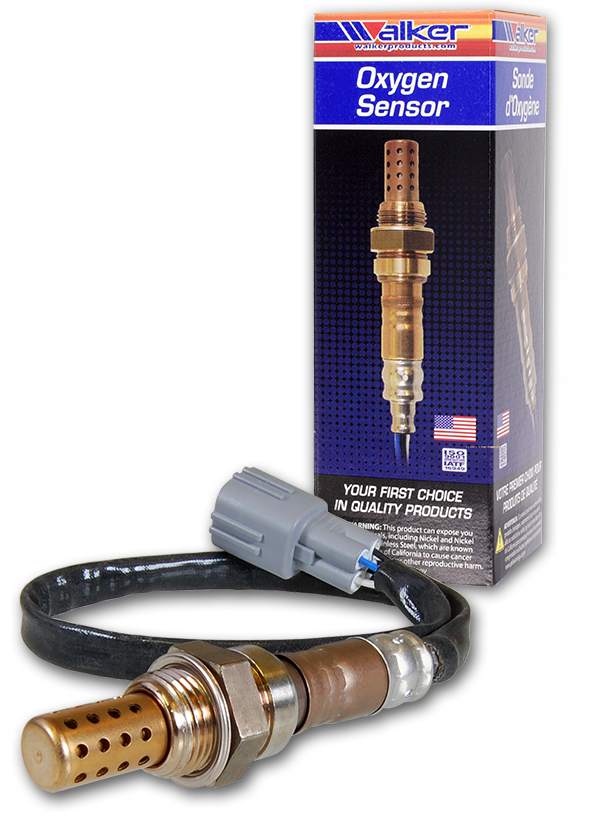 How It Works:
- The sensor body contains a zirconium dioxide (zirconia) ceramic element, coated with gas-permeable platinum electrodes.
- Exhaust gas contacts one side of the element, while the other side is exposed to outside air.
- The difference in oxygen concentration generates a voltage signal proportional to exhaust oxygen levels.
- The ECU interprets this voltage to adjust fuel injection timing and duration, maintaining efficient combustion and emissions control.
- In heated O2 sensors, a built-in heating element quicklybrings the sensor to operating temperature for accurate readings
even during cold starts.
Product Features & Benefits from Walker Products:
- Improved Engine Response & Performance: Rapid feedback ensures precise air-fuel ratio control.
- Lower Emissions: Optimized combustion minimizes harmful pollutants.
- Improved Fuel Economy: Prevents fuel waste and maintains engine efficiency.
- Longer Sensor Life: Designed with high-temperature ceramic and platinum coatings.
- Meets or Exceeds OEM Specifications: Built to original design and testing standards.
Symptoms of a Failing Oxygen Sensor
- Poor fuel economy (10–15% decrease possible)
- Check Engine Light (MIL) illuminated
- Failed emissions test
- Rough idle, hesitation, or surging
- Premature catalytic converter failure
Preventive Maintenance
- Heated O2 sensors (3- or 4-wire): Replace every 60,000–100,000 miles
- Unheated O2 sensors (1- or 2-wire): Replace every 30,000–50,000 miles
- Check or replace sensors at each major tune-up to prevent catalyst damage and maintain fuel efficiency.
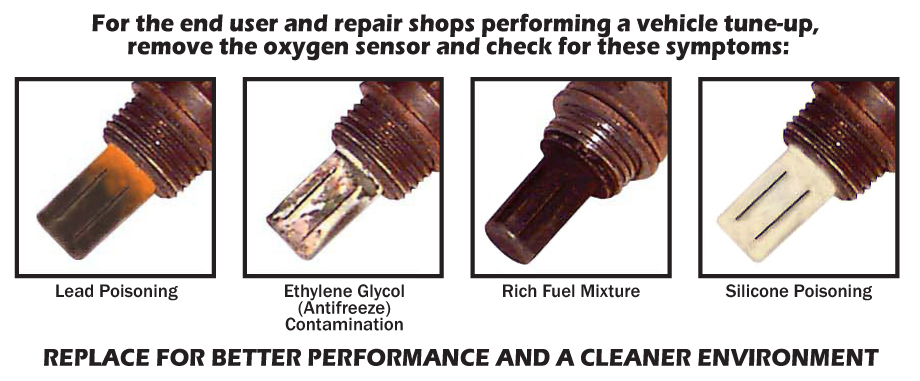
Click here to diagnose types of oxygen sensor contamination.
Where are my oxygen sensors located?
Related Components
Walker Products offers O2 Sensor Bungs & Plugs made in-house from mild steel or stainless steel at our Screw Machine Facility in Fruita, Colorado. We also offer O2 Sensor Sockets and Wrenches designed for ease of installation, and custom bung solutions available individually, in bulk, or in stocking kits.
Common Check Engine Light (CEL) / OBD-II Codes
In accordance with the EPA’s OBD-II standards (adopted in 1996 and later expanded to heavy-duty applications), the following Diagnostic Trouble Codes (DTCs) are commonly associated with Oxygen Sensors.
Use this list as a general reference only. Always consult a qualified technician and follow vehicle manufacturer and EPA guidelines for diagnostics, sensor replacement, and ECU/PCM relearn procedures.
- P0150 – O2 Sensor Circuit Malfunction
- P0151 – O2 Sensor Circuit Low Voltage
- P0152 – O2 Sensor Circuit High Voltage
- P0153 – O2 Sensor Circuit Slow Response
- P0154 – O2 Sensor Circuit No Activity Detected
- P0155 – O2 Sensor Heater Circuit Malfunction
- P0156 – O2 Sensor Circuit Malfunction
- P0157 – O2 Sensor Circuit Low Voltage
- P0158 – O2 Sensor Circuit High Voltage
- P0159 – O2 Sensor Circuit Slow Response
- P0160 – O2 Sensor Circuit No Activity Detected
- P0161 – O2 Sensor Heater Circuit Malfunction
- P0162 – O2 Sensor Circuit Malfunction
- P0163 – O2 Sensor Circuit Low Voltage
- P0164 – O2 Sensor Circuit High Voltage
- P0165 – O2 Sensor Circuit Slow Response
- P0166 – O2 Sensor Circuit No Activity Detected
- P0167 – O2 Sensor Heater Circuit Malfunction
- P0170 – Fuel Trim Malfunction
- P0171 – System Too Lean
- P0172 – System Too Rich
- P0173 – Fuel Trim Malfunction
- P0174 – System Too Lean
- P0175 – System Too Rich
1. What does an oxygen (O2) sensor do?
An oxygen sensor measures the amount of oxygen in the exhaust stream and sends that data to the engine control module. This information is used to adjust the air-fuel mixture for proper engine performance, fuel efficiency, and emissions control.
2. What are common symptoms of a failing oxygen sensor?
Common symptoms include an illuminated Check Engine Light, poor fuel economy, rough idle, hesitation, or failed emissions testing. A failing oxygen sensor can cause the engine to run too rich or too lean.
3. Can a bad oxygen sensor affect fuel economy?
Yes. When an oxygen sensor sends inaccurate signals, the engine may deliver too much or too little fuel, which often leads to reduced fuel efficiency.
4. Should oxygen sensors be replaced regularly?
Oxygen sensors are wear items and typically last between 60,000 and 100,000 miles, depending on operating conditions.
5. How do I know which oxygen sensor is right for my vehicle?
Oxygen sensors are vehicle‑ and location‑specific. Always match the correct sensor to your year, make, model, engine, and sensor position for proper fit and performance.
6. How much does it cost to replace an oxygen sensor?
Oxygen sensor replacement costs vary by vehicle and sensor location. As a general reference, DIY replacement costs can range from about $20 to $300 per sensor, depending on the application. Professional replacement typically ranges from approximately $150 to $600, including parts and labor. Upstream sensors, sensor type, and labor access can all affect total cost.
7. How do I know which oxygen sensor is right for my vehicle?
Oxygen sensors are vehicle‑ and location‑specific. Always match the correct sensor to your year, make, model, engine, and sensor position for proper fit and performance.
1. What is the functional difference between upstream and downstream oxygen sensors?
Upstream (pre‑catalyst) sensors provide feedback for closed‑loop fuel control and directly influence short‑ and long‑term fuel trims. Downstream (post‑catalyst) sensors are used by the PCM to monitor catalytic converter efficiency and emissions performance.
2. Why does an oxygen sensor DTC return after replacement?
Repeat O2 sensor codes are often caused by exhaust leaks, wiring or connector damage, incorrect sensor placement, fuel trim issues, or underlying engine problems. Replacing the sensor alone will not correct external system faults.
3. Can exhaust leaks cause false oxygen sensor readings?
Yes. Exhaust leaks upstream of the sensor can introduce ambient oxygen and cause false lean signals. Oil consumption, coolant leaks, rich conditions, or fuel contamination can also degrade sensor accuracy and response time.
4. How does oxygen sensor response time affect diagnostics?
Slow sensor response can delay fuel trim corrections and trigger codes such as slow response or no activity detected. A sensor may still switch but not meet PCM timing thresholds.
5. Should oxygen sensors be replaced when replacing a catalytic converter?
In many applications, replacing aged or slow‑responding oxygen sensors during catalytic converter replacement helps ensure accurate catalyst monitoring and reduces the risk of repeat efficiency codes.
👉 View https://www.walkerproducts.com/upstream-oxygen-sensors/
👉 View https://www.walkerproducts.com/downstream-oxygen-sensors/
6. What factors affect oxygen sensor replacement cost?
Oxygen sensor replacement cost varies based on several factors, including sensor location (upstream vs downstream), vehicle configuration, sensor type (wideband vs narrowband), connector style, and labor accessibility. As a general reference, DIY sensor costs may range from approximately $20 to $300, while professional replacement including labor often ranges from about $150 to $600 per sensor. Accurate diagnosis helps avoid unnecessary replacement.
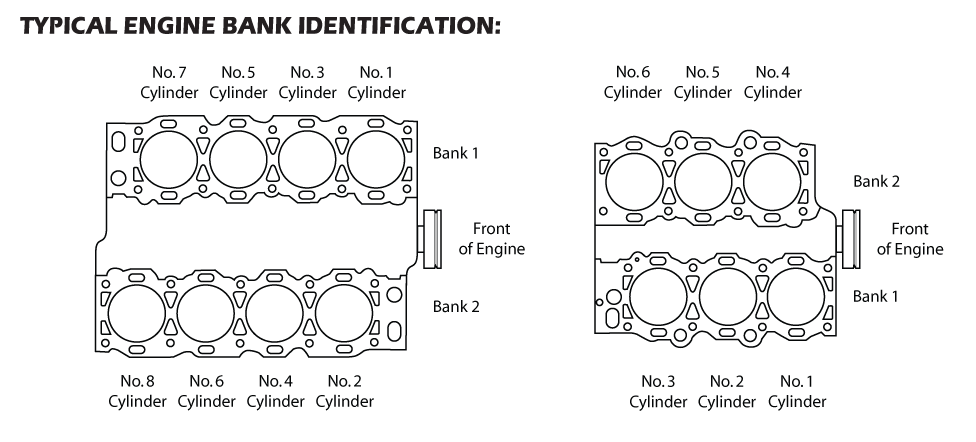
7. What does Bank 1 Sensor 1 vs Bank 1 Sensor 2 mean?
Bank 1 refers to the engine bank containing cylinder one. Sensor 1 identifies the upstream sensor before the catalytic converter, while Sensor 2 identifies the downstream sensor after the catalytic converter.
8. Do O2 sensor codes always mean the sensor is bad?
No. OBD II codes indicate a detected fault, not a confirmed failed component. Proper diagnosis should include checking wiring integrity, exhaust leaks, fuel trims, and related engine conditions.