
The Ignition Coil, also known as a Spark Coil, is a critical component of a vehicle’s ignition system. It functions as a transformer, converting the standard 12 volts supplied by the vehicle’s electrical system into the 25,000 to 30,000 volts (or higher) required to produce a spark at the spark plug.
This high-voltage spark ignites the air-fuel mixture within each cylinder, ensuring efficient combustion, smooth engine performance, and optimized power output. Without a properly functioning ignition coil, the engine may misfire, run roughly, or fail to start entirely.
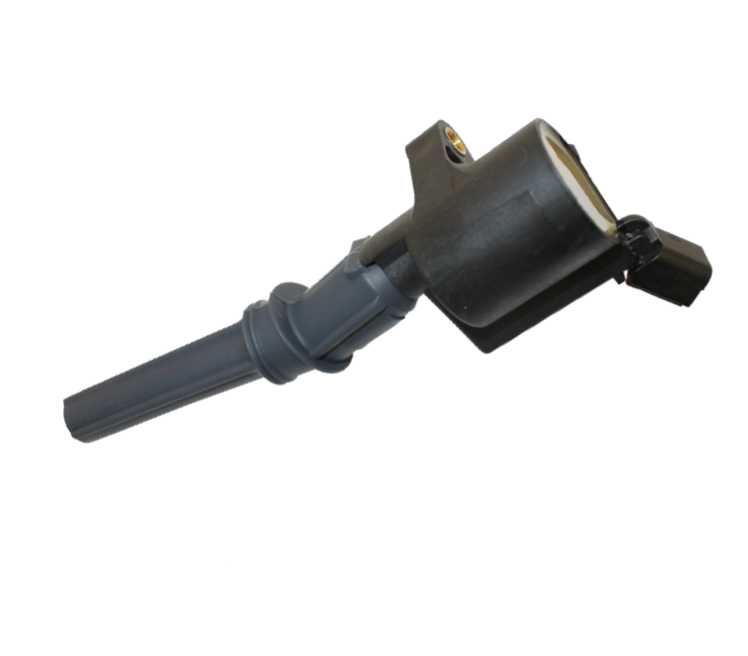 How It Works:
- The ignition coil receives low-voltage current from the battery.
- Inside the coil, magnetic induction amplifies that current to a much higher voltage.
- This high-voltage current is delivered to the spark
- plug, igniting the air-fuel mixture.
- The process repeats thousands of times per minute, powering the engine’s combustion cycle.
Modern vehicles use various coil configurations such as coil-on-plug, pencil coils, or coil packs, depending on the manufacturer’s ignition design.
Product Features & Benefits from Walker Products:
- Exact OE Fit: Designed as a direct-fit replacement for fast and easy installation.
- OE Replacement Quality: Built to meet or exceed OEM specifications for performance and durability.
- High-Temperature Resistant: Advanced materials withstand extreme heat and vibration.
- Improved Combustion Efficiency: Ensures consistent, powerful spark output for smoother performance.
- Comprehensive Coverage: Fits a wide range of domestic and import vehicles from 1960 to current models.
- Reliable Performance: Reduces misfires, improves fuel economy, and restores engine smoothness.
Symptoms of a Failing Ignition Coil:
- Engine misfires or rough idle.
- Loss of power and poor acceleration.
- Hard starting or no-start conditions.
- Reduced fuel efficiency.
- Illuminated Check Engine Light (CEL).
Ignoring coil failure may lead to catalytic converter damage or emission system faults, so early diagnosis and replacement are recommended.
Common Check Engine Light (CEL) / OBD-II Codes
The following OBD-II codes are commonly associated with ignition coil circuit or performance issues. These may appear if a coil is malfunctioning, shorted, or failing under load:
- P0350 – Ignition Coil Primary/Secondary Circuit Malfunction
- P0351 – Ignition Coil “A” Primary/Secondary Circuit
- P0352 – Ignition Coil “B” Primary/Secondary Circuit
- P0353 – Ignition Coil “C” Primary/Secondary Circuit
- P0354 – Ignition Coil “D” Primary/Secondary Circuit
- P0355 – Ignition Coil “E” Primary/Secondary Circuit
- P0356 – Ignition Coil “F” Primary/Secondary Circuit
- P0357 – Ignition Coil “G” Primary/Secondary Circuit
- P0358 – Ignition Coil “H” Primary/Secondary Circuit
- P0360 – Ignition Coil “J” Primary/Secondary Circuit
- P0361 – Ignition Coil “K” Primary/Secondary Circuit
- P0362 – Ignition Coil “L” Primary/Secondary Circuit
What does an ignition coil do?
An ignition coil converts the vehicle’s battery voltage into the high voltage needed to create a spark at the spark plugs. This spark ignites the air-fuel mixture inside the engine’s combustion chambers.
What is the purpose of an ignition coil?
The ignition coil is responsible for supplying the electrical energy needed for combustion. Without sufficient voltage from the ignition coil, the spark plugs cannot ignite the air-fuel mixture effectively.
Is an ignition coil the same as a spark plug?
No. An ignition coil generates the high voltage required for ignition, while a spark plug uses that voltage to create a spark inside the combustion chamber.
Do ignition coils improve engine performance?
A properly functioning ignition coil helps maintain efficient combustion, smooth acceleration, reliable starting, and optimal fuel economy. Replacing a worn ignition coil can help restore original engine performance.
What types of vehicles use ignition coils?
Ignition coils are used on nearly all modern gasoline-powered passenger cars, trucks, SUVs, vans, and performance vehicles. Coil designs vary depending on the ignition system and engine application.
Are ignition coils vehicle-specific?
Yes. Ignition coils are designed for specific vehicle makes, models, and engine configurations to ensure proper fit, electrical characteristics, and performance.
Can a bad ignition coil affect fuel economy?
Yes. The ignition system relies on consistent spark energy to efficiently burn fuel. Inaccurate or weak ignition performance can reduce combustion efficiency and affect fuel economy.
How do I know if my ignition coil is working properly?
Ignition coil operation can be verified using a diagnostic scan tool, ignition system tester, or other diagnostic equipment. Consistent engine performance and proper combustion indicate the ignition system is functioning correctly.
What is the difference between a coil pack and a coil-on-plug ignition coil?
Both components perform the same basic function of generating high voltage for ignition. A coil pack serves multiple cylinders, while a coil-on-plug ignition coil is mounted directly above an individual spark plug.
Will a bad ignition coil trigger a check engine light?
Yes. If the ignition coil is unable to provide consistent spark energy, the ECM may detect an ignition-related issue, illuminate the Check Engine Light, and store a diagnostic trouble code (DTC).