
Fuel Injectors are precision-engineered components that deliver the right amount of fuel to your engine under all operating conditions. Controlled by the vehicle’s Powertrain Control Module (PCM) or Engine Control Unit (ECU), each injector atomizes fuel into a fine mist, ensuring the correct air-fuel mixture for efficient combustion, performance, and reduced emissions.
There are three main types of injectors used in modern vehicles:
- Throttle Body Injection (TBI): Sprays fuel into the throttle body for distribution to all cylinders.
- Port Fuel Injection (PFI): Delivers fuel directly into each intake port, providing more precise fuel metering.
- Direct Injection (DI): Operates at extremely high pressures, injecting fuel directly into each cylinder for maximum efficiency and power.
Regardless of the system, all fuel injectors perform one crucial role — to ensure optimal fuel atomization for smooth operation and lower emissions.
How It Works:
Each fuel injector is an electronically controlled valve designed to open and close in milliseconds based on signals from the vehicle’s ECU.
- When commanded, the injector opens to allow pressurized fuel to pass through its tip.
- The fuel is atomized into a fine mist for even combustion.
- The ECU continuously adjusts injector pulse width based on sensor data, including oxygen, air temperature, and mass airflow readings.
This constant feedback loop allows your engine to maintain the perfect air-fuel ratio, improving fuel efficiency and drivability.
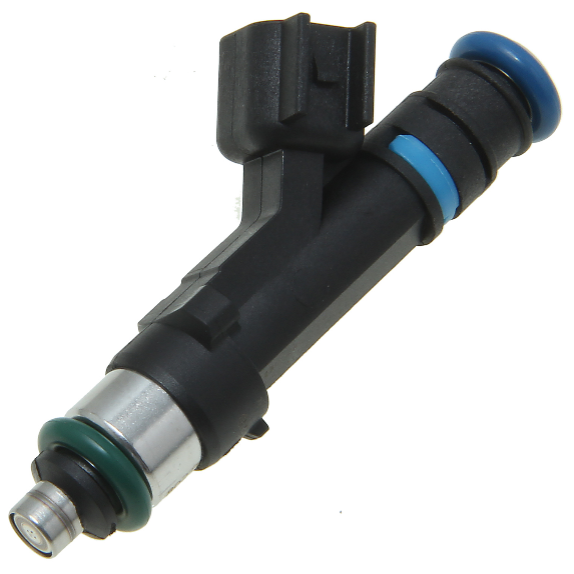 Product Features & Benefits from Walker Products:
- Exact OE Fit: Direct replacement injectors designed for proper fit, form, and function.
- OE Replacement Quality: Meets or exceeds OEM standards for flow rate, spray pattern, and durability.
- Precision Atomization: Engineered nozzle design ensures fine, consistent fuel spray for efficient combustion.
- Corrosion-Resistant Construction: Built to withstand ethanol and fuel additives.
- Improved Performance: Restores smooth idle, acceleration, and fuel economy.
- Comprehensive Coverage: Available for TBI, PFI, and Direct Injection systems.
Symptoms of a Failing Fuel Injector
- Hard starting or no start.
- Rough idle or engine surging.
- Loss of power or hesitation during acceleration.
- Reduced fuel efficiency.
- Check Engine Light (CEL) illuminated.
When one or more injectors malfunction, the air-fuel mixture becomes imbalanced — leading to poor performance and increased emissions.
Common Check Engine Light (CEL) / OBD-II Codes
In compliance with the EPA’s OBD-II emissions standards, all post-1996 vehicles are equipped with On-Board Diagnostics (OBD-II) systems. The following Diagnostic Trouble Codes (DTCs) are commonly associated with Fuel Injector or Fuel Trim issues.
These codes are provided as a general reference only. Always consult a certified technician and follow manufacturer and EPA guidelines for diagnostics, sensor replacement, and ECU/PCM relearn procedures.
- P00BB – Fuel Injector Insufficient Flow – Forced Limited Power
- P02CC – Cylinder 1 Fuel Injector Offset Learning At Min Limit
- P02CD – Cylinder 1 Fuel Injector Offset Learning At Max Limit
- P02CE – Cylinder 2 Fuel Injector Offset Learning At Min Limit
- P02CF – Cylinder 2 Fuel Injector Offset Learning At Max Limit
- P02D0 – Cylinder 3 Fuel Injector Offset Learning At Min Limit
- P02D1 – Cylinder 3 Fuel Injector Offset Learning At Max Limit
- P02D2 – Cylinder 4 Fuel Injector Offset Learning At Min Limit
- P02D3 – Cylinder 4 Fuel Injector Offset Learning At Max Limit
- P02D4 – Cylinder 5 Fuel Injector Offset Learning At Min Limit
- P02D5 – Cylinder 5 Fuel Injector Offset Learning At Max Limit
- P02D6 – Cylinder 6 Fuel Injector Offset Learning At Min Limit
- P02D7 – Cylinder 6 Fuel Injector Offset Learning At Max Limit
- P02D8 – Cylinder 7 Fuel Injector Offset Learning At Min Limit
- P02D9 – Cylinder 7 Fuel Injector Offset Learning At Max Limit
- P02DA – Cylinder 8 Fuel Injector Offset Learning At Min Limit
- P02DB – Cylinder 8 Fuel Injector Offset Learning At Max Limit
- P02DC – Cylinder 9 Fuel Injector Offset Learning At Min Limit
- P02DD – Cylinder 9 Fuel Injector Offset Learning At Max Limit
- P02DE – Cylinder 10 Fuel Injector Offset Learning At Min Limit
- P02DF – Cylinder 10 Fuel Injector Offset Learning At Max Limit
- P0611 – Fuel Injector Control Module Performance
- P0612 – Fuel Injector Control Module Relay Control
- P062B – Internal Control Module Fuel Injector Control Performance
- P062D – Fuel Injector Driver Circuit Performance
- P062E – Fuel Injector Driver Circuit Performance
- P2146 – Fuel Injector Group “A” Supply Voltage Circuit/Open
- P2147 – Fuel Injector Group “A” Supply Voltage Circuit Low
- P2148 – Fuel Injector Group “A” Supply Voltage Circuit High
- P2149 – Fuel Injector Group “B” Supply Voltage Circuit/Open
- P2150 – Fuel Injector Group “B” Supply Voltage Circuit Low
- P2151 – Fuel Injector Group “B” Supply Voltage Circuit High
- P2152 – Fuel Injector Group “C” Supply Voltage Circuit/Open
- P2153 – Fuel Injector Group “C” Supply Voltage Circuit Low
- P2154 – Fuel Injector Group “C” Supply Voltage Circuit High
- P2155 – Fuel Injector Group “D” Supply Voltage Circuit/Open
- P2156 – Fuel Injector Group “D” Supply Voltage Circuit Low
- P2157 – Fuel Injector Group “D” Supply Voltage Circuit High
- P216A – Fuel Injector Group “E” Supply Voltage Circuit/Open
- P216B – Fuel Injector Group “E” Supply Voltage Circuit Low
- P216C – Fuel Injector Group “E” Supply Voltage Circuit High
- P216D – Fuel Injector Group “F” Supply Voltage Circuit/Open
- P216E – Fuel Injector Group “F” Supply Voltage Circuit Low
- P216F – Fuel Injector Group “F” Supply Voltage Circuit High
- P217A – Fuel Injector Group “G” Supply Voltage Circuit/Open
- P217B – Fuel Injector Group “G” Supply Voltage Circuit Low
- P217C – Fuel Injector Group “G” Supply Voltage Circuit High
- P217D – Fuel Injector Group “H” Supply Voltage Circuit/Open
- P217E – Fuel Injector Group “H” Supply Voltage Circuit Low
- P217F – Fuel Injector Group “H” Supply Voltage Circuit High
- P268A – Fuel Injector Calibration not Learned/Programmed
- U0105 – Lost Communication With Fuel Injector Control Module
- U0306 – Software Incompatibility With Fuel Injector Control Module
- U0406 – Invalid Data Received From Fuel Injector Control Module
- P0171 – System Too Lean
- P0174 – System Too Lean
- P2096 – Post Catalyst Fuel Trim System Too Lean
- P2098 – Post Catalyst Fuel Trim System Too Lean
- P2177 – System Too Lean Off Idle
- P2179 – System Too Lean Off Idle
- P2187 – System Too Lean at Idle
- P2189 – System Too Lean at Idle
- P2191 – System Too Lean at Higher Load
- P2193 – System Too Lean at Higher Load
- P0172 – System Too Rich
- P0175 – System Too Rich
- P2097 – Post Catalyst Fuel Trim System Too Rich
- P2099 – Post Catalyst Fuel Trim System Too Rich
- P2178 – System Too Rich Off Idle
- P2180 – System Too Rich Off Idle
- P2188 – System Too Rich at Idle
- P2190 – System Too Rich at Idle
- P2192 – System Too Rich at Higher Load
- P2194 – System Too Rich at Higher Load
- P0170 – Fuel Trim
- P0173 – Fuel Trim
- P029A Cylinder 1 – Fuel Trim at Max Limit
- P029B Cylinder 1 – Fuel Trim at Min Limit
- P029E Cylinder 2 – Fuel Trim at Max Limit
- P029F Cylinder 2 – Fuel Trim at Min Limit
- P02A2 Cylinder 3 – Fuel Trim at Max Limit
- P02A3 Cylinder 3 – Fuel Trim at Min Limit
- P02A6 Cylinder 4 – Fuel Trim at Max Limit
- P02A7 Cylinder 4 – Fuel Trim at Min Limit
- P02AA Cylinder 5 – Fuel Trim at Max Limit
- P02AB Cylinder 5 – Fuel Trim at Min Limit
- P02AE Cylinder 6 – Fuel Trim at Max Limit
- P02AF Cylinder 6 – Fuel Trim at Min Limit
- P02B2 Cylinder 7 – Fuel Trim at Max Limit
- P02B3 Cylinder 7 – Fuel Trim at Min Limit
- P02B6 Cylinder 8 – Fuel Trim at Max Limit
- P02B7 Cylinder 8 – Fuel Trim at Min Limit
- P02BA Cylinder 9 – Fuel Trim at Max Limit
- P02BB Cylinder 9 – Fuel Trim at Min Limit
- P02BE Cylinder 10 – Fuel Trim at Max Limit
- P02BF Cylinder 10 – Fuel Trim at Min Limit
- P02C2 Cylinder 11 – Fuel Trim at Max Limit
- P02C3 Cylinder 11 – Fuel Trim at Min Limit
- P02C6 Cylinder 12 – Fuel Trim at Max Limit
- P02C7 Cylinder 12 – Fuel Trim at Min Limit
What is a fuel injector?
A fuel injector is an electronically controlled engine management component that delivers fuel into the engine. It is designed to provide the appropriate amount of fuel at the correct time, helping the engine maintain efficient combustion, dependable performance, fuel economy, and emissions control.
What does a fuel injector do?
A fuel injector receives pressurized fuel from the vehicle’s fuel system and sprays it into the intake port or combustion chamber, depending on the engine design. The engine control module controls when the injector opens and how long it remains open based on engine speed, load, temperature, and other operating conditions.
Proper fuel injector operation helps maintain the correct air-fuel mixture for smooth acceleration, stable idle, efficient combustion, and reliable engine performance.
Which part does this fuel injector replace?
This Walker Products fuel injector is designed to replace the corresponding original equipment or cross-referenced fuel injector in compatible vehicle applications. It provides the fuel delivery function required by the engine management system while offering application-specific fit and electrical connectivity.
Always verify the listed interchange, vehicle year, make, model, engine, fuel system, and injector position before purchasing or installing the replacement fuel injector.
How does this fuel injector replace the original injector?
This replacement fuel injector installs in the corresponding location on the vehicle’s fuel rail, intake system, or engine in compatible applications. It connects to the existing electrical system and responds to commands from the engine control module to regulate fuel delivery.
A properly selected replacement fuel injector is designed to provide the appropriate fit, connection, and fuel delivery function for the listed application. Installation requirements vary by vehicle, so always follow the vehicle manufacturer’s service procedures.
What are the different types of fuel injectors?
Common fuel injector types include port fuel injectors and gasoline direct injection fuel injectors. Port fuel injectors deliver fuel into the intake port before it enters the combustion chamber. Gasoline direct injection, commonly called GDI, delivers fuel directly into the combustion chamber at higher pressure.
Some engines use both port injection and direct injection. Fuel injectors are application-specific and should not be selected by appearance alone. Confirm the vehicle, engine, fuel system, connector, and injector location before ordering.
What are the symptoms of a bad fuel injector?
Common symptoms of a clogged, leaking, or failing fuel injector may include:
- Rough or unstable idle
- Engine misfires
- Hesitation or poor acceleration
- Reduced engine performance
- Hard starting or extended cranking
- Engine stalling
- Poor fuel economy
- Increased exhaust emissions
- Fuel odor
- Rich or lean operating conditions
- An illuminated Check Engine Light
These symptoms can also be caused by ignition problems, incorrect fuel pressure, wiring faults, vacuum leaks, sensor failures, or mechanical engine concerns. Proper diagnosis should be completed before replacing a fuel injector.
Can a bad fuel injector cause a rough idle or engine misfire?
Yes. A restricted, leaking, or electrically faulty fuel injector may deliver too little fuel, too much fuel, or an inconsistent spray pattern. This can cause a rough idle, engine vibration, hesitation, or a cylinder misfire.
Spark plugs, ignition coils, compression problems, intake leaks, wiring faults, and fuel pressure concerns can produce similar symptoms. The affected cylinder and related systems should be tested before the injector is replaced.
Can a faulty fuel injector cause starting or stalling problems?
Yes. A fuel injector that is clogged, leaking, or not operating electrically may interfere with the air-fuel mixture needed for startup and low-speed operation. The engine may be difficult to start, require extended cranking, start and stall, or stall while idling.
Starting and stalling problems can have several possible causes. The fuel pressure, electrical circuit, ignition system, air intake system, engine sensors, and mechanical condition should be inspected as part of a complete diagnosis.
Can a bad fuel injector cause poor fuel economy or reduced engine performance?
Yes. A leaking fuel injector may deliver more fuel than the engine requires, while a clogged or restricted injector may not provide enough fuel. Either condition can interfere with combustion and contribute to poor fuel economy, loss of power, hesitation, increased emissions, or inconsistent engine performance.
Replacing a confirmed faulty fuel injector may help restore proper fuel delivery. It will not correct poor performance when the underlying problem is elsewhere in the fuel, ignition, air intake, electrical, or mechanical system.
Can a leaking fuel injector cause a fuel smell?
Yes. A fuel injector may leak internally through its nozzle or externally around its seals or connection points. Depending on the type and location of the leak, this may cause a fuel odor, rich operation, difficult starting, increased fuel consumption, or visible fuel near the fuel rail.
Fuel is flammable, and any suspected fuel leak should be addressed immediately using the vehicle manufacturer’s safety and repair procedures. Do not operate a vehicle with a visible or confirmed external fuel leak.
Can a bad fuel injector trigger the Check Engine Light?
Yes. A fuel injector problem may cause the engine control module to illuminate the Check Engine Light and store an OBD-II diagnostic trouble code. Codes may relate to an injector electrical circuit, cylinder misfire, or rich or lean operating condition.
A diagnostic trouble code identifies the system, circuit, or operating condition where a fault was detected. It does not always confirm that the fuel injector itself has failed. Wiring, connectors, fuel pressure, ignition components, intake leaks, and mechanical engine conditions should also be inspected.
What causes a fuel injector to fail?
Common causes of fuel injector problems may include:
- Normal component wear
- Fuel deposits or internal contamination
- Restricted injector passages
- Internal electrical failure
- Damaged wiring or connectors
- Loose or corroded electrical terminals
- Contaminated fuel
- Incorrect fuel pressure
- Damaged injector seals
- Excessive heat or vibration
- Moisture intrusion
- Debris in the fuel system
Fuel system contamination or pressure problems should be corrected before the replacement injector is installed to help prevent repeat concerns.
Can a clogged fuel injector be cleaned?
Some fuel injectors can be cleaned using an approved fuel system service procedure. Cleaning may help when deposits are affecting fuel flow or spray performance, but it will not repair a failed electrical winding, damaged connector, worn internal component, cracked injector body, or leaking seal.
Cleaning methods and approved chemicals vary by fuel system and injector design. Follow the vehicle manufacturer’s procedures and avoid applying unsupported cleaning methods that could damage the injector or fuel system.
How is a fuel injector tested?
Fuel injector diagnosis may include checking diagnostic trouble codes, injector electrical resistance, power and control signals, fuel pressure, pressure drop, cylinder contribution, and injector balance. A technician may also inspect the injector for leakage or evaluate its operation using appropriate diagnostic equipment.
Test procedures and acceptable measurements vary by application. Follow the vehicle manufacturer’s service information rather than replacing an injector based only on symptoms or a trouble code.
Will replacing a failed fuel injector restore engine performance?
Replacing a confirmed faulty fuel injector may help restore proper fuel delivery, smooth idle, acceleration, fuel economy, emissions performance, and overall engine operation.
Replacement may not correct these concerns if they are caused by incorrect fuel pressure, contaminated fuel, damaged wiring, an ignition fault, an intake leak, a sensor problem, or an internal engine condition. Diagnosing the complete system helps prevent unnecessary component replacement.
Is this a direct-fit fuel injector?
This Walker Products fuel injector is designed for application-specific installation in compatible vehicles. It is engineered to provide the appropriate mounting configuration, electrical connection, and fuel delivery function for the listed applications.
Confirm the vehicle year, make, model, engine, fuel system, connector, and injector position before installation. Application-specific fit does not mean that one injector fits every vehicle.
Does a direct-fit fuel injector require wiring modifications?
A direct-fit fuel injector uses an application-specific electrical connector and physical configuration for compatible applications. This allows it to connect to the corresponding vehicle wiring without the splicing commonly associated with universal components.
Inspect the vehicle-side connector, terminals, and wiring for corrosion, heat damage, looseness, or broken insulation before installing the replacement injector.
Should fuel injector seals be replaced during installation?
Fuel injector O-rings, seals, and related installation components should be inspected and replaced as required by the vehicle manufacturer’s service procedure. Reusing a damaged, hardened, cut, or incorrectly installed seal may result in a fuel or air leak.
Use only the specified seal lubricant and installation method. Petroleum-based products or improper tools may damage certain sealing materials. Always relieve fuel system pressure before removing a fuel injector.
Should all fuel injectors be replaced at the same time?
Not necessarily. If testing identifies one defective fuel injector and the remaining injectors are operating correctly, only the failed injector may require replacement. In other cases, contamination, mileage, injector balance results, or vehicle manufacturer procedures may support servicing multiple injectors.
The replacement decision should be based on proper testing and the condition of the complete fuel system rather than an automatic requirement to replace every injector.
Does a fuel injector require programming or relearning after installation?
Programming, calibration, or relearn requirements vary by vehicle and fuel injection system. Some replacement fuel injectors can be installed without programming, while certain applications may require injector identification or calibration data to be entered using a compatible scan tool.
Always review the vehicle manufacturer’s service information before installation. Do not assume that every replacement fuel injector uses the same setup procedure.