
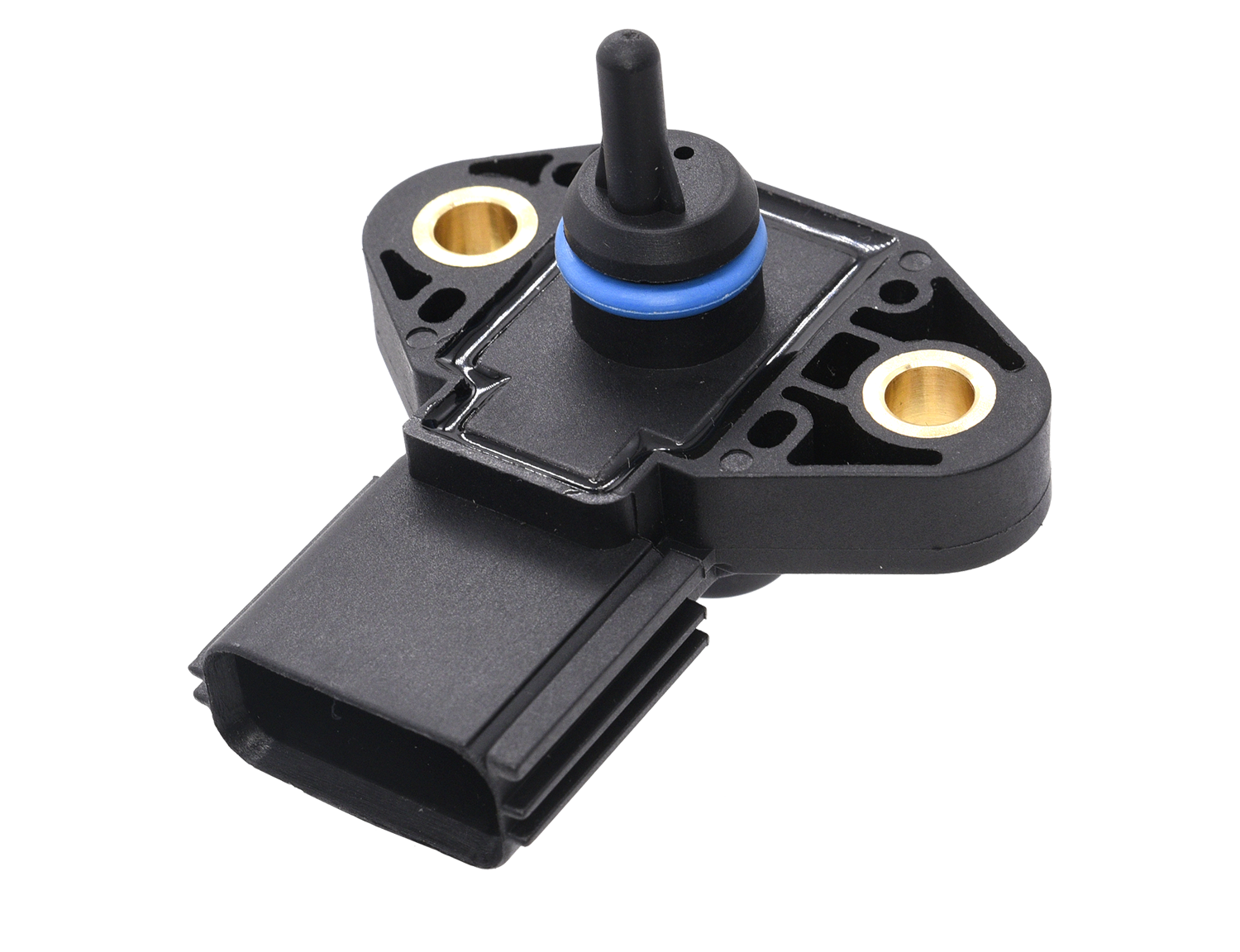
The Fuel Injection Control Pressure (ICP) Sensor monitors the high-pressure oil system in diesel engines—particularly those utilizing HEUI (Hydraulic Electronic Unit Injector) technology.
This sensor measures the pressure of the oil that powers the injectors and sends that information to the Engine Control Unit (ECU). The ECU uses this data to adjust injector timing, pulse width, and fuel delivery, ensuring optimal combustion under all driving conditions.
Accurate oil pressure readings are crucial for proper injector actuation, fuel atomization, and engine efficiency, especially during acceleration, towing, or heavy load operation.
How It Works:
- The ICP sensor is mounted on or near the high-pressure oil rail.
- As the engine runs, it measures real-time oil pressure in the HEUI system.
- The sensor converts pressure data into an electrical signal sent to the ECU.
- The ECU interprets this signal to fine-tune fuel injector control, maintaining efficient engine performance and emissions compliance.
Proper ICP sensor performance ensures smooth starts, consistent power, and optimal fuel economy in diesel engines.
Product Features & Benefits from Walker Products:
- Exact OE Fit: Direct replacement design for seamless installation.
- OE Replacement Quality: Built to meet or exceed OEM performance and durability standards.
- Precision Accuracy: Provides reliable, real-time oil pressure data for precise injector control.
- Heavy-Duty Construction: Designed to withstand high temperatures, pressure spikes, and vibration found in diesel applications.
- Improved Engine Performance: Restores correct fuel injection timing and smooth operation.
- Durability You Can Trust: Manufactured with premium materials for long service life.
 Symptoms of a Failing ICP Sensor:
- Hard starting or no-start condition.
- Rough idle or engine hesitation.
- Loss of power, especially during load or acceleration.
- Decreased fuel efficiency.
- Illuminated Check Engine Light (CEL).
If ignored, these symptoms can lead to fuel delivery imbalance, incomplete combustion, and increased emissions.
Common Check Engine Light (CEL) / OBD-II Codes
As mandated by the EPA, all vehicles produced after 1996 are equipped with OBD-II diagnostic systems to monitor emissions and critical engine performance parameters.
The following Diagnostic Trouble Codes (DTCs) are commonly associated with Fuel Injection Control Pressure Sensor issues.
These codes are provided for reference only. Always consult a qualified technician and follow manufacturer and EPA guidelines for diagnosis, removal, and ECU/PCM relearn procedures.
- P0190 – Fuel Rail Pressure Sensor Circuit
- P0191 – Fuel Rail Pressure Sensor Circuit Range/Performance
- P0192 – Fuel Rail Pressure Sensor Circuit Low
- P0193 – Fuel Rail Pressure Sensor Circuit High
- P0194 – Fuel Rail Pressure Sensor Circuit Intermittent
- P2283 – Injector Control Pressure Too Low
- P2284 – Injector Control Pressure Sensor Circuit Range/Performance
- P2285 – Injector Control Pressure Sensor Circuit Low
- P2286 – Injector Control Pressure Sensor Circuit High
- P2287 – Injector Control Pressure Sensor Circuit Intermittent