
The Flex Fuel Sensor, also known as an Ethanol Content Sensor, is an essential component in vehicles designed to operate on ethanol-gasoline blends, such as E85.
This sensor continuously measures the ethanol-to-gasoline ratio in the fuel and sends that data to the Engine Control Unit (ECU).
Based on this information, the ECU automatically adjusts ignition timing, fuel delivery, and the air-fuel mixture, ensuring the engine runs efficiently and within emissions standards — no matter the fuel composition.
Whether the vehicle is using regular gasoline, ethanol, or any mixture in between, the Flex Fuel Sensor helps maintain optimal performance, reliability, and emissions control.
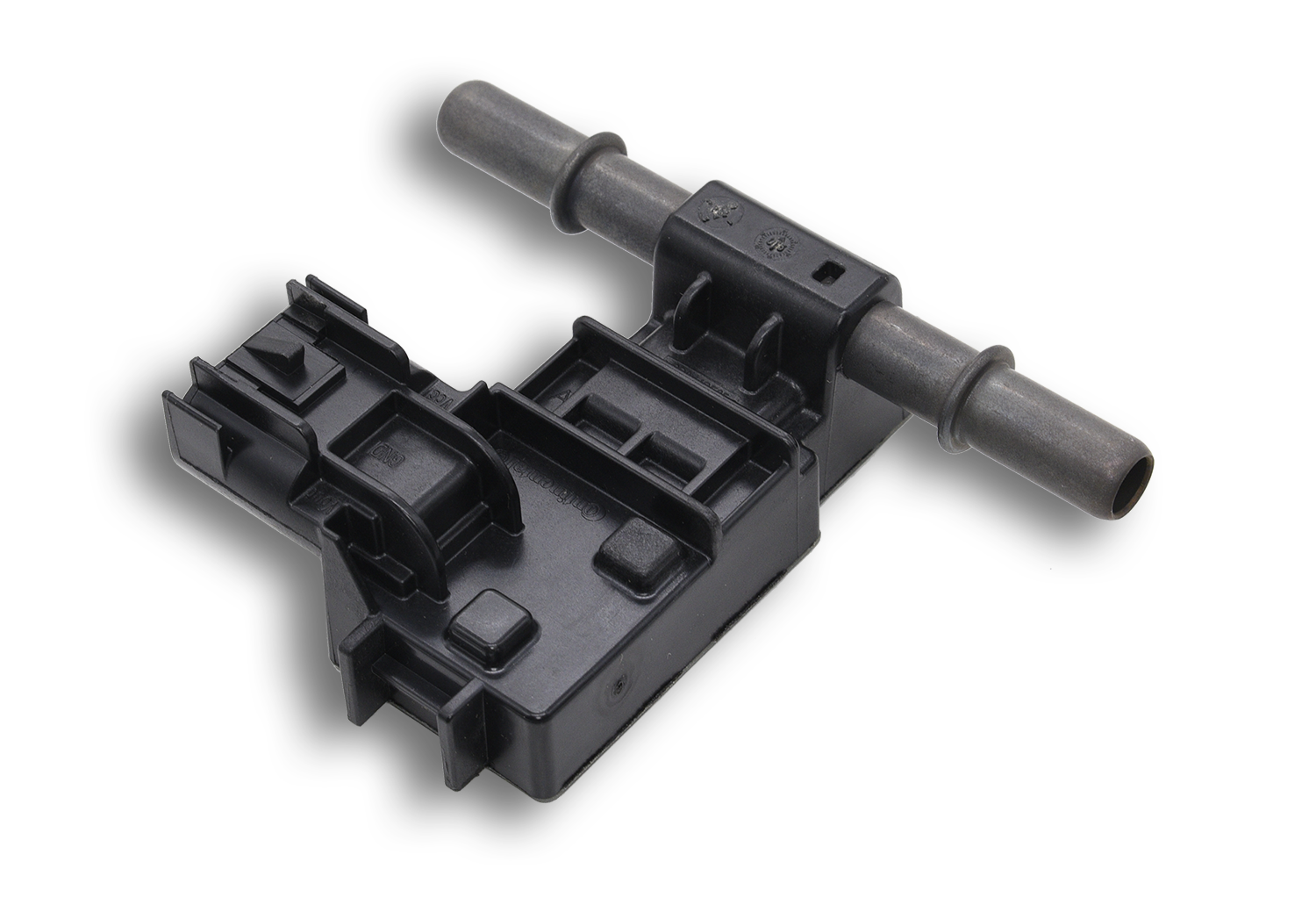 How It Works:
- Fuel passes through the sensor’s flow chamber, where it’s analyzed by a capacitive or ultrasonic element.
- The sensor measures changes in dielectric properties (linked to ethanol concentration).
- This data is converted into a frequency signal or digital output sent to the ECU.
- The ECU then adjusts fuel trim, spark timing,and injection pulse width to optimize combustion.
This precise, real-time monitoring allows seamless switching between fuel types, delivering consistent drivability and performance.
Product Features & Benefits from Walker Products:
- Exact OE Fit: Designed as a direct-fit replacement for easy installation.
- OE Replacement Quality: Meets or exceeds OEM specifications for performance and durability.
- Precision Fuel Measurement: Provides accurate ethanol-to-gasoline ratio data for optimal ECU calibration.
- Durable Construction: Resistant to ethanol corrosion, fuel contamination, and vibration.
- Improved Fuel Efficiency: Enables proper air-fuel mixture control across varying fuel compositions.
- Comprehensive Compatibility: Works with vehicles utilizing Flex Fuel and E85 technology.
Symptoms of a Failing Flex Fuel Sensor:
- Reduced engine performance or hesitation during acceleration.
- Hard starting, especially in cold conditions.
- Decreased fuel efficiency and poor throttle response.
- Check Engine Light (CEL) illumination.
- Inaccurate fuel adjustments, leading to rough idle or stalling.
These symptoms often appear gradually as the sensor’s accuracy declines.
Common Check Engine Light (CEL) / OBD-II Codes
In accordance with the EPA’s OBD-II standards (adopted in 1996 and later expanded to heavy-duty applications), the following Diagnostic Trouble Codes (DTCs) are commonly associated with Flex Fuel Sensors.
Use this list as a general reference only. Always consult a qualified technician and follow vehicle manufacturer and EPA guidelines for diagnostics, sensor replacement, and ECU/PCM relearn procedures.
- P0178 – Fuel Composition Sensor Circuit Low Input
- P0179 – Fuel Composition Sensor Circuit High Input
- P0180 – Fuel Temperature Sensor A Circuit
- P0181 – Fuel Temperature Sensor A Circuit Range/Performance
- P0182 – Fuel Temperature Sensor A Circuit Low
- P0183 – Fuel Temperature Sensor A Circuit High
- P0184 – Fuel Temperature Sensor A Circuit Intermittent