
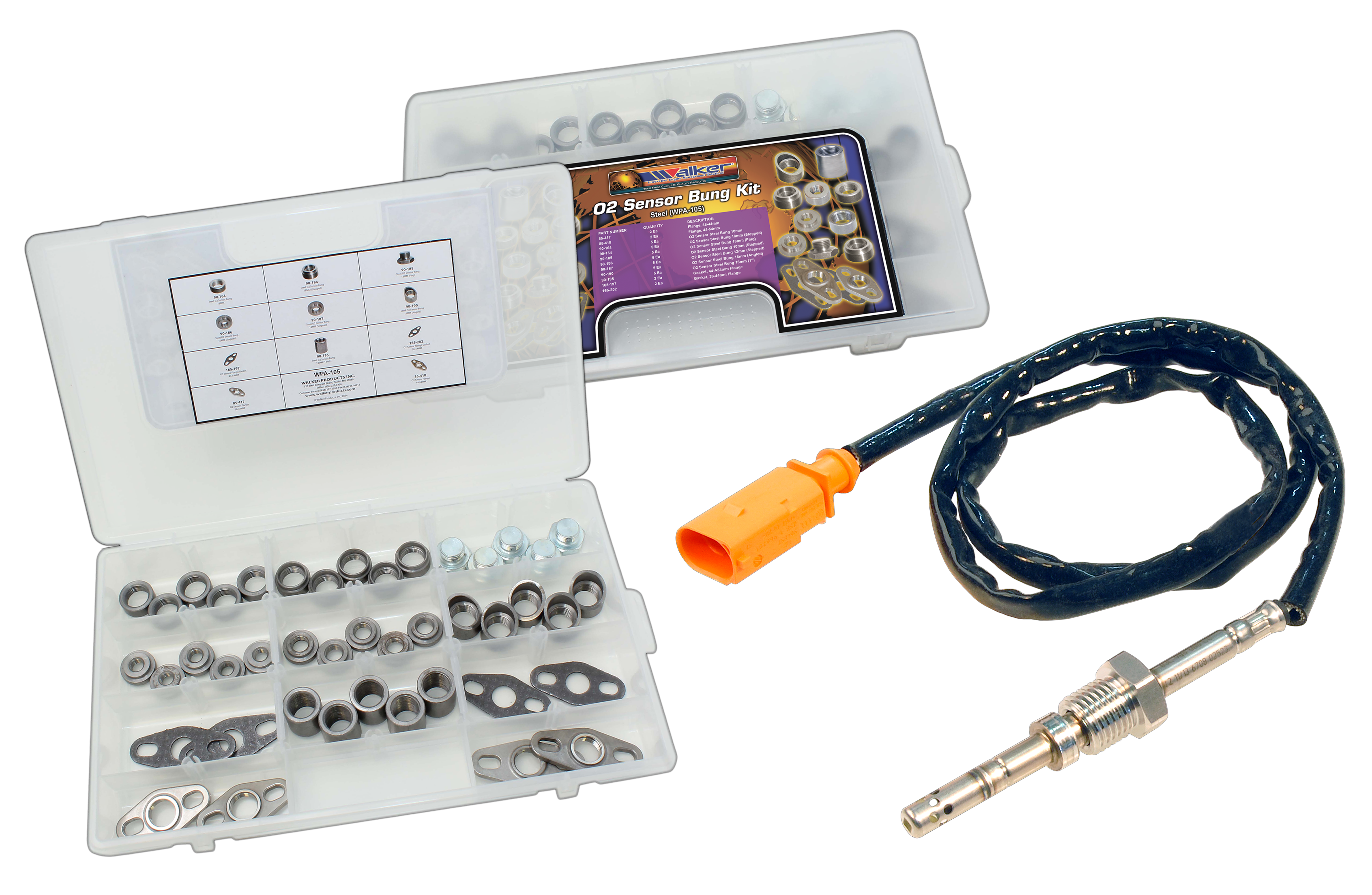
The Exhaust Gas Temperature Sensor (EGTS), also commonly referred to as an Exhaust Temperature Sensor (ETS) or High Temperature Sensor (HTS), measures the temperature in the exhaust system (EGT) of the vehicle. The sensing element of an ETS/HTS changes resistance with fluctuations in temperature. The onboard computer—either the Engine Control Unit (ECU) or Powertrain Control Module (PCM)—monitors this resistance and calculates the actual exhaust temperature.
This process protects the engine and exhaust components from overheating. EGT sensors are typically found in later-model diesel vehicles to safeguard the Diesel Particulate Filter (DPF) and support proper regeneration cycles. Some newer gasoline vehicles also use EGT sensor technology to fine-tune fuel and ignition timing by closely monitoring exhaust gas temperature as it relates to air/fuel ratios.
Walker Products also offers an extensive selection of exhaust Bungs & Plugs manufactured in 303 Stainless Steel at our Screw Machine Facility in Fruita, Colorado, USA. These are available individually, in standard or custom stocking kits, and in bulk, with custom options for specialized exhaust applications.
How It Works:
- The sensing element inside the EGTS alters its electrical resistance based on temperature.
- The ECU or PCM measures this resistance and calculates the exhaust gas temperature.
- When exhaust temperatures rise above a calibrated threshold, the system can adjust fueling, ignition timing, or DPF regeneration cycles to prevent overheating.
- Multiple EGTS units are often installed throughout the exhaust system—before and after the turbocharger, catalytic converter, and DPF—to ensure efficiency and emission compliance.
 Symptoms of a Failing Exhaust Gas Temperature Sensor:
- Poor fuel economy.
- Engine overheating.
- Black smoke coming from exhaust.
- Engine surging or reduced power.
- Vehicle enters limp-mode (speed reduced).
- Check Engine Light on.
Product Features & Benefits from Walker Products:
- Exact OE Fit: Direct-fit replacement ensures reliable installation and alignment.
- OE Replacement Quality: Manufactured to meet or exceed original equipment standards.
- High-Temperature Durability: Built to withstand continuous heat exposure in extreme exhaust environments.
- Accurate Signal Output: Provides precise feedback to the ECU/PCM for optimal DPF management.
- Enhanced Emissions Control: Supports proper regeneration and reduced particulate emissions.
- Extended Service Life: Designed for long-term performance and resistance to corrosion.
Common Check Engine Light (CEL) / OBD-II Codes
In accordance with the EPA’s OBD-II standards (adopted in 1996 and later expanded to heavy-duty applications), the following Diagnostic Trouble Codes (DTCs) are commonly associated with Exhaust Gas Temperature Sensors.
Use this list as a general reference only. Always consult a qualified technician and follow vehicle manufacturer and EPA guidelines for diagnostics, sensor replacement, and ECU/PCM relearn procedures.
- P0544 – Exhaust Gas Temperature Sensor Circuit
- P0545 – Exhaust Gas Temperature Sensor Circuit Low
- P0546 – Exhaust Gas Temperature Sensor Circuit High
- P0547 – Exhaust Gas Temperature Sensor Circuit
- P0548 – Exhaust Gas Temperature Sensor Circuit Low
- P0549 – Exhaust Gas Temperature Sensor Circuit High
- P2031 – Exhaust Gas Temperature Sensor Circuit
- P2032 – Exhaust Gas Temperature Sensor Circuit Low
- P2033 – Exhaust Gas Temperature Sensor Circuit High
- P2034 – Exhaust Gas Temperature Sensor Circuit
- P2035 – Exhaust Gas Temperature Sensor Circuit Low
- P2036 – Exhaust Gas Temperature Sensor Circuit High
- P2080 – Exhaust Gas Temperature Sensor Circuit Range/Performance
- P2081 – Exhaust Gas Temperature Sensor Circuit Intermittent
- P2082 – Exhaust Gas Temperature Sensor Circuit Range/Performance
- P2083 – Exhaust Gas Temperature Sensor Circuit Intermittent
- P2084 – Exhaust Gas Temperature Sensor Circuit Range/Performance
- P2085 – Exhaust Gas Temperature Sensor Circuit Intermittent
- P2086 – Exhaust Gas Temperature Sensor Circuit Range/Performance
- P2087 – Exhaust Gas Temperature Sensor Circuit Intermittent
- P20E2 – Exhaust Gas Temperature Sensor 1/2 Correlation
- P20E3 – Exhaust Gas Temperature Sensor 1/3 Correlation
- P20E4 – Exhaust Gas Temperature Sensor 2/3 Correlation
- P20E5 – Exhaust Gas Temperature Sensor 1/2 Correlation
- P2428 – Exhaust Gas Temperature Too High
- P2429 – Exhaust Gas Temperature Too High
- P242A – Exhaust Gas Temperature Sensor Circuit
- P242B – Exhaust Gas Temperature Sensor Circuit Range/Performance
- P242C – Exhaust Gas Temperature Sensor Circuit Low
- P242D – Exhaust Gas Temperature Sensor Circuit High
- P242E – Exhaust Gas Temperature Sensor Circuit Intermittent/Erratic
- P2466 – Exhaust Gas Temperature Sensor Circuit
- P2467 – Exhaust Gas Temperature Sensor Circuit Range/Performance
- P2468 – Exhaust Gas Temperature Sensor Circuit Low
- P2469 – Exhaust Gas Temperature Sensor Circuit High
- P246A – Exhaust Gas Temperature Sensor Circuit Intermittent/Erratic
- P246E – Exhaust Gas Temperature Sensor Circuit
- P246F – Exhaust Gas Temperature Sensor Circuit Range/Performance
- P2470 – Exhaust Gas Temperature Sensor Circuit Low
- P2471 – Exhaust Gas Temperature Sensor Circuit High
- P2472 – Exhaust Gas Temperature Sensor Circuit Intermittent/Erratic
- P2473 – Exhaust Gas Temperature Sensor Circuit
- P2474 – Exhaust Gas Temperature Sensor Circuit Range/Performance
- P2475 – Exhaust Gas Temperature Sensor Circuit Low
- P2476 – Exhaust Gas Temperature Sensor Circuit High
- P2477 – Exhaust Gas Temperature Sensor Circuit Intermittent/Erratic
- P2478 – Exhaust Gas Temperature Out of Range
- P2479 – Exhaust Gas Temperature Out of Range
- P247A – Exhaust Gas Temperature Out of Range
- P247B – Exhaust Gas Temperature Out of Range
- P247C – Exhaust Gas Temperature Out of Range
- P247D – Exhaust Gas Temperature Out of Range
- P247E – Exhaust Gas Temperature Out of Range
- P247F – Exhaust Gas Temperature Out of Range
- P2480 – Exhaust Gas Temperature Sensor Circuit/Open
- P2481 – Exhaust Gas Temperature Sensor Circuit Low
- P2482 – Exhaust Gas Temperature Sensor Circuit High
- P2483 – Exhaust Gas Temperature Sensor Circuit Range/Performance
- P2484 – Exhaust Gas Temperature Sensor Circuit Intermittent/Erratic
- P2485 – Exhaust Gas Temperature Sensor Circuit/Open
- P2486 – Exhaust Gas Temperature Sensor Circuit Low
- P2487 – Exhaust Gas Temperature Sensor Circuit High
- P2488 – Exhaust Gas Temperature Sensor Circuit Range/Performance
- P2489 – Exhaust Gas Temperature Sensor Circuit Intermittent/Erratic
- P2002 – Diesel Particulate Filter Efficiency Below Threshold
- P2003 – Diesel Particulate Filter Efficiency Below Threshold
- P200C – Diesel Particulate Filter Over Temperature
- P200D – Diesel Particulate Filter Over Temperature
- P242F – Diesel Particulate Filter Restriction – Ash Accumulation
- P2458 – Diesel Particulate Filter Regeneration Duration
- P2459 – Diesel Particulate Filter Regeneration Frequency
- P2463 – Diesel Particulate Filter Restriction – Soot Accumulation
- P246B – Vehicle Conditions Incorrect for Diesel Particulate Filter
- P246C – Diesel Particulate Filter Restriction – Forced Limited Power
- P246D – Diesel Particulate Filter Pressure Sensor “A”/“B” Correlation
- P260E – Diesel Particulate Filter Regeneration Lamp Control Circuit