
The Exhaust Gas Recirculation (EGR) Valve meters a measured amount of exhaust gas back into the intake manifold. Recirculating exhaust lowers combustion chamber temperatures, which helps reduce NOx emissions while supporting smooth drivability and fuel efficiency.
How It Works:
- The ECU/PCM commands the EGR valve to open/close based on engine load, RPM, and temperature.
- A controlled portion of exhaust mixes with intake air, reducing peak combustion temperatures.
- On many applications, the system uses EGR temperature/position/pressure feedback to verify correct flow.
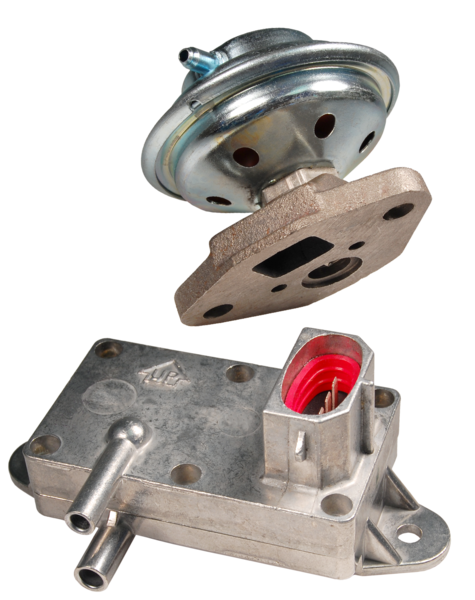 Product Features & Benefits from Walker Products:
- Exact OE Fit: Direct OE replacement for fast, hassle-free install.
- OE Replacement Quality: Meets or exceeds OE performance for flow control and response.
- Carbon-Resistant Design: Materials and pintle/seat geometry engineered to reduce sticking.
- Stable Emissions Control: Helps restore proper NOx reduction and drivability.
- Durable Construction: Built to withstand heat, vibration, and contaminated exhaust environments.
Symptoms of a Failing EGR Valve:
- Difficult starts
- Engine surging
- Rough idle or stalling at idle
- Reduced fuel efficiency
- Fuel odor
- Knocking/pinging noises
- Illuminated Check Engine Light (CEL)
Common Check Engine Light (CEL) / OBD-II Codes
In an effort to reduce emissions, the EPA mandated OBD-II on all 1996-and-newer passenger vehicles. The codes below are commonly associated with EGR Valve systems and are for guidance only.
Walker Products will not be responsible for use of this information. Always consult a professionally trained mechanic and follow vehicle manufacturer and EPA guidelines for removal, replacement, diagnostics, OBD-II code clearing, and ECU/PCM relearn procedures.
- P2BAB – NOx Exceedence – Incorrect EGR Flow
- P2BAC – NOx Exceedence – Deactivation of EGR
- P0400 – Exhaust Gas Recirculation “A” Flow
- P0401 – Exhaust Gas Recirculation “A” Flow Insufficient Detected
- P0402 – Exhaust Gas Recirculation “A” Flow Excessive Detected
- P0403 – Exhaust Gas Recirculation “A” Control Circuit
- P0404 – Exhaust Gas Recirculation “A” Control Circuit Range/Performance
- P0405 – Exhaust Gas Recirculation Sensor “A” Circuit Low
- P0406 – Exhaust Gas Recirculation Sensor “A” Circuit High
- P0407 – Exhaust Gas Recirculation Sensor “B” Circuit Low
- P0408 – Exhaust Gas Recirculation Sensor “B” Circuit High
- P0409 – Exhaust Gas Recirculation Sensor “A” Circuit
- P040A – Exhaust Gas Recirculation Temperature Sensor “A” Circuit
- P040B – Exhaust Gas Recirculation Temperature Sensor “A” Circuit
- P040C – Exhaust Gas Recirculation Temperature Sensor “A” Circuit Low
- P040D – Exhaust Gas Recirculation Temperature Sensor “A” Circuit High
- P040E – Exhaust Gas Recirculation Temperature Sensor “A” Circuit
- P040F – Exhaust Gas Recirculation Temperature Sensor “A”/“B” Correlation
- P041A – Exhaust Gas Recirculation Temperature Sensor “B” Circuit
- P041B – Exhaust Gas Recirculation Temperature Sensor “B” Circuit
- P041C – Exhaust Gas Recirculation Temperature Sensor “B” Circuit Low
- P041D – Exhaust Gas Recirculation Temperature Sensor “B” Circuit High
- P041E – Exhaust Gas Recirculation Temperature Sensor “B” Circuit
- P042E – Exhaust Gas Recirculation “A” Control Stuck Open
- P042F – Exhaust Gas Recirculation “A” Control Stuck Closed
- P044A – Exhaust Gas Recirculation Sensor “C” Circuit
- P044B – Exhaust Gas Recirculation Sensor “C” Circuit Range/Performance
- P044C – Exhaust Gas Recirculation Sensor “C” Circuit Low
- P044D – Exhaust Gas Recirculation Sensor “C” Circuit High
- P044E – Exhaust Gas Recirculation Sensor “C” Circuit Intermittent/Erratic
- P045A – Exhaust Gas Recirculation “B” Control Circuit
- P045B – Exhaust Gas Recirculation “B” Control Circuit Range/Performance
- P045C – Exhaust Gas Recirculation “B” Control Circuit Low
- P045D – Exhaust Gas Recirculation “B” Control Circuit High
- P045E – Exhaust Gas Recirculation “B” Control Stuck Open
- P045F – Exhaust Gas Recirculation “B” Control Stuck Closed
- P046C – Exhaust Gas Recirculation Sensor “A” Circuit Range/Performance
- P046D – Exhaust Gas Recirculation Sensor “A” Circuit Intermittent/Erratic
- P046E – Exhaust Gas Recirculation Sensor “B” Circuit Range/Performance
- P046F – Exhaust Gas Recirculation Sensor “B” Circuit Intermittent/Erratic
- P0486 – Exhaust Gas Recirculation Sensor “B” Circuit
- P0487 – Exhaust Gas Recirculation Throttle Control Circuit “A” /Open
- P0488 – Exhaust Gas Recirculation Throttle Control Circuit “A”
- P0489 – Exhaust Gas Recirculation “A” Control Circuit Low
- P0490 – Exhaust Gas Recirculation “A” Control Circuit High
- P049A – Exhaust Gas Recirculation “B” Flow
- P049B – Exhaust Gas Recirculation “B” Flow Insufficient Detected
- P049C – Exhaust Gas Recirculation “B” Flow Excessive Detected
- P049D – Exhaust Gas Recirculation “A” Control Position Exceeded Learning
- P049E – Exhaust Gas Recirculation “B” Control Position Exceeded Learning
- P213A – Exhaust Gas Recirculation Throttle Control Circuit “B” /Open
- P213B – Exhaust Gas Recirculation Throttle Control Circuit “B”
- P213C – Exhaust Gas Recirculation Throttle Control Circuit “B” Low
- P213D – Exhaust Gas Recirculation Throttle Control Circuit “B” High
- P2141 – Exhaust Gas Recirculation Throttle Control Circuit “A” Low
- P2142 – Exhaust Gas Recirculation Throttle Control Circuit “A” High
- P2143 – Exhaust Gas Recirculation Vent Control Circuit/Open
- P2144 – Exhaust Gas Recirculation Vent Control Circuit Low
- P2145 – Exhaust Gas Recirculation Vent Control Circuit High
- P2413 – Exhaust Gas Recirculation System Performance
- P2425 – Exhaust Gas Recirculation Cooling Valve Control Circuit/Open
- P2426 – Exhaust Gas Recirculation Cooling Valve Control Circuit Low
- P2427 – Exhaust Gas Recirculation Cooling Valve Control Circuit High
- P2457 – Exhaust Gas Recirculation Cooling System Performance
- P245A – Exhaust Gas Recirculation Cooler Bypass Control Circuit/Open
- P245B – Exhaust Gas Recirculation Cooler Bypass Control Circuit
- P245C – Exhaust Gas Recirculation Cooler Bypass Control Circuit Low
- P245D – Exhaust Gas Recirculation Cooler Bypass Control Circuit High
- U010A – Lost Communication With Exhaust Gas Recirculation Control Module
- U010B – Lost Communication With Exhaust Gas Recirculation Control Module
- U040B – Invalid Data Received From Exhaust Gas Recirculation Control
- U040C Invalid Data Received From Exhaust Gas Recirculation Control
Exhaust Gas Recirculation (EGR) Valve Position Sensor
The Exhaust Gas Recirculation (EGR) Valve Position Sensor, also known as the EVP Sensor, measures the position of the EGR valve and reports that data to the vehicle’s onboard computer (ECU or PCM).
This allows the system to verify the valve’s movement and ensure that the correct amount of exhaust gas is recirculated back into the intake for optimal emissions control and performance.
 How It Works:
- The EVP sensor uses a voltage-based feedback signal to indicate the valve’s position—closed, partially open, or fully open.
- The ECU/PCM compares this feedback to commanded positions during operation.
- If the sensor signal does not match the expected EGR valve movement, the system adjusts valve control or sets a Diagnostic Trouble Code (DTC).
- This feedback loop helps maintain stable engine idle, efficient combustion, and reduced NOx emissions.
Product Features & Benefits from Walker Products:
- Exact OE Fit: Designed to match the vehicle’s original equipment specifications for direct installation
- OE Replacement Quality: Engineered to meet or exceed OE sensor performance and voltage accuracy
- Durable Construction: Built to withstand high-temperature exhaust environments
- Restores Proper EGR Operation: Enables accurate valve feedback for optimized combustion and reduced NOx emissions
Symptoms of a Failing EVP Sensor:
- Rough idle
- Engine surging or hesitation
- Illuminated Check Engine Light (CEL)
If not corrected, inaccurate EGR valve feedback can cause drivability issues, poor emissions performance, and reduced fuel efficiency.
Common Check Engine Light (CEL) / OBD-II Codes
In accordance with EPA OBD-II standards, all vehicles manufactured after 1996 include onboard diagnostic systems to monitor emissions and performance.
The codes below are commonly associated with EGR Valve Position Sensor (EVP) issues.
These should be used as a guide only. Always consult a qualified technician and follow manufacturer and EPA guidelines for diagnostics, code clearing, and ECU/PCM relearn procedures.
- P0404 – Exhaust Gas Recirculation “A” Control Circuit Range/Performance
- P0405 – Exhaust Gas Recirculation Sensor “A” Circuit Low
- P0406 – Exhaust Gas Recirculation Sensor “A” Circuit High
- P0407 – Exhaust Gas Recirculation Sensor “B” Circuit Low
- P0408 – Exhaust Gas Recirculation Sensor “B” Circuit High
- P0409 – Exhaust Gas Recirculation Sensor “A” Circuit
- P042E – Exhaust Gas Recirculation “A” Control Stuck Open
- P042F – Exhaust Gas Recirculation “A” Control Stuck Closed
- P044A – Exhaust Gas Recirculation Sensor “C” Circuit
- P044B – Exhaust Gas Recirculation Sensor “C” Circuit Range/Performance
- P044C – Exhaust Gas Recirculation Sensor “C” Circuit Low
- P044D – Exhaust Gas Recirculation Sensor “C” Circuit High
- P044E – Exhaust Gas Recirculation Sensor “C” Circuit Intermittent/Erratic
- P045A – Exhaust Gas Recirculation “B” Control Circuit
- P045B – Exhaust Gas Recirculation “B” Control Circuit Range/Performance
- P045C – Exhaust Gas Recirculation “B” Control Circuit Low
- P045D – Exhaust Gas Recirculation “B” Control Circuit High
- P045E – Exhaust Gas Recirculation “B” Control Stuck Open
- P045F – Exhaust Gas Recirculation “B” Control Stuck Closed
- P046C – Exhaust Gas Recirculation Sensor “A” Circuit Range/Performance
- P046D – Exhaust Gas Recirculation Sensor “A” Circuit Intermittent/Erratic
- P046E – Exhaust Gas Recirculation Sensor “B” Circuit Range/Performance
- P046F – Exhaust Gas Recirculation Sensor “B” Circuit Intermittent/Erratic
- P0486 – Exhaust Gas Recirculation Sensor “B” Circuit
- P0487 – Exhaust Gas Recirculation Throttle Control Circuit “A” /Open
- P0488 – Exhaust Gas Recirculation Throttle Control Circuit “A”
- P0489 – Exhaust Gas Recirculation “A” Control Circuit Low
- P0490 – Exhaust Gas Recirculation “A” Control Circuit High
- P049A – Exhaust Gas Recirculation “B” Flow
- P049B – Exhaust Gas Recirculation “B” Flow Insufficient Detected
- P049C – Exhaust Gas Recirculation “B” Flow Excessive Detected
- P049D – Exhaust Gas Recirculation “A” Control Position Exceeded Learning
- P049E – Exhaust Gas Recirculation “B” Control Position Exceeded Learning
- P213A – Exhaust Gas Recirculation Throttle Control Circuit “B” /Open
- P213B – Exhaust Gas Recirculation Throttle Control Circuit “B”
- P213C – Exhaust Gas Recirculation Throttle Control Circuit “B” Low
- P213D – Exhaust Gas Recirculation Throttle Control Circuit “B” High
- P2141 – Exhaust Gas Recirculation Throttle Control Circuit “A” Low
- P2142 – Exhaust Gas Recirculation Throttle Control Circuit “A” High
- P2143 – Exhaust Gas Recirculation Vent Control Circuit/Open
- P2144 – Exhaust Gas Recirculation Vent Control Circuit Low
- P2145 – Exhaust Gas Recirculation Vent Control Circuit High
- P2413 – Exhaust Gas Recirculation System Performance
Exhaust Gas Recirculation Valve Pressure Sensor (EVPS)
The Exhaust Gas Recirculation Valve Pressure Sensor (EVPS) monitors pressure within the EGR passages and sends a voltage signal to the ECU/PCM. The computer uses this—along with other sensor inputs—to meter the correct amount of exhaust gas back into the intake, reducing combustion temps and NOx emissions.
 How It Works:
- The sensor sits in (or is plumbed to) the EGR passage and senses pressure (or differential pressure) as exhaust flows.
- Internal electronics convert that pressure to a precise voltage signal.
- The ECU/PCM compares commanded EGR flow vs. actual pressure feedback to confirm proper operation.
- If pressure is too low/high for the commanded state, the ECU adjusts EGR valve position and may set a DTC if the deviation persists.
Product Features & Benefits from Walker Products:
- Exact OE Fit: Direct replacement designed to meet OE voltage and pressure sensitivity
- OE Replacement Quality: Engineered to match factory calibration and signal output
- Durable Materials: Built to withstand high-heat, high-pressure exhaust environments
- Restores Emissions Accuracy: Ensures proper EGR system operation and NOx reduction
Symptoms of a Failing EGR Valve Pressure Sensor:
- Rough idle
- Engine detonation (pinging)
- Surging or hesitation
- Illuminated Check Engine Light (CEL)
Common Check Engine Light (CEL) / OBD-II Codes
In accordance with the EPA’s OBD-II standards (adopted in 1996 and later expanded to heavy-duty applications), the following Diagnostic Trouble Codes (DTCs) are commonly associated with Exhaust Gas Recirculation Valve Pressure Sensors.
Use this list as a general reference only. Always consult a qualified technician and follow vehicle manufacturer and EPA guidelines for diagnostics, sensor replacement, and ECU/PCM relearn procedures.
- P0404 – Exhaust Gas Recirculation “A” Control Circuit Range/Performance
- P0405 – Exhaust Gas Recirculation Sensor “A” Circuit Low
- P0406 – Exhaust Gas Recirculation Sensor “A” Circuit High
- P0407 – Exhaust Gas Recirculation Sensor “B” Circuit Low
- P0408 – Exhaust Gas Recirculation Sensor “B” Circuit High
- P0409 – Exhaust Gas Recirculation Sensor “A” Circuit
- P042E – Exhaust Gas Recirculation “A” Control Stuck Open
- P042F – Exhaust Gas Recirculation “A” Control Stuck Closed
- P044A – Exhaust Gas Recirculation Sensor “C” Circuit
- P044B – Exhaust Gas Recirculation Sensor “C” Circuit Range/Performance
- P044C – Exhaust Gas Recirculation Sensor “C” Circuit Low
- P044D – Exhaust Gas Recirculation Sensor “C” Circuit High
- P044E – Exhaust Gas Recirculation Sensor “C” Circuit Intermittent/Erratic
- P045A – Exhaust Gas Recirculation “B” Control Circuit
- P045B – Exhaust Gas Recirculation “B” Control Circuit Range/Performance
- P045C – Exhaust Gas Recirculation “B” Control Circuit Low
- P045D – Exhaust Gas Recirculation “B” Control Circuit High
- P045E – Exhaust Gas Recirculation “B” Control Stuck Open
- P045F – Exhaust Gas Recirculation “B” Control Stuck Closed
- P046C – Exhaust Gas Recirculation Sensor “A” Circuit Range/Performance
- P046D – Exhaust Gas Recirculation Sensor “A” Circuit Intermittent/Erratic
- P046E – Exhaust Gas Recirculation Sensor “B” Circuit Range/Performance
- P046F – Exhaust Gas Recirculation Sensor “B” Circuit Intermittent/Erratic
- P0486 – Exhaust Gas Recirculation Sensor “B” Circuit
- P0487 – Exhaust Gas Recirculation Throttle Control Circuit “A” /Open
- P0488 – Exhaust Gas Recirculation Throttle Control Circuit “A”
- P0489 – Exhaust Gas Recirculation “A” Control Circuit Low
- P0490 – Exhaust Gas Recirculation “A” Control Circuit High
- P049A – Exhaust Gas Recirculation “B” Flow
- P049B – Exhaust Gas Recirculation “B” Flow Insufficient Detected
- P049C – Exhaust Gas Recirculation “B” Flow Excessive Detected
- P049D – Exhaust Gas Recirculation “A” Control Position Exceeded Learning
- P049E – Exhaust Gas Recirculation “B” Control Position Exceeded Learning
- P213A – Exhaust Gas Recirculation Throttle Control Circuit “B” /Open
- P213B – Exhaust Gas Recirculation Throttle Control Circuit “B”
- P213C – Exhaust Gas Recirculation Throttle Control Circuit “B” Low
- P213D – Exhaust Gas Recirculation Throttle Control Circuit “B” High
- P2141 – Exhaust Gas Recirculation Throttle Control Circuit “A” Low
- P2142 – Exhaust Gas Recirculation Throttle Control Circuit “A” High
- P2143 – Exhaust Gas Recirculation Vent Control Circuit/Open
- P2144 – Exhaust Gas Recirculation Vent Control Circuit Low
- P2145 – Exhaust Gas Recirculation Vent Control Circuit High
- P2413 – Exhaust Gas Recirculation System Performance